Get your free CO2 calculator
Grow the best plants with your FREE CO2 calculator.


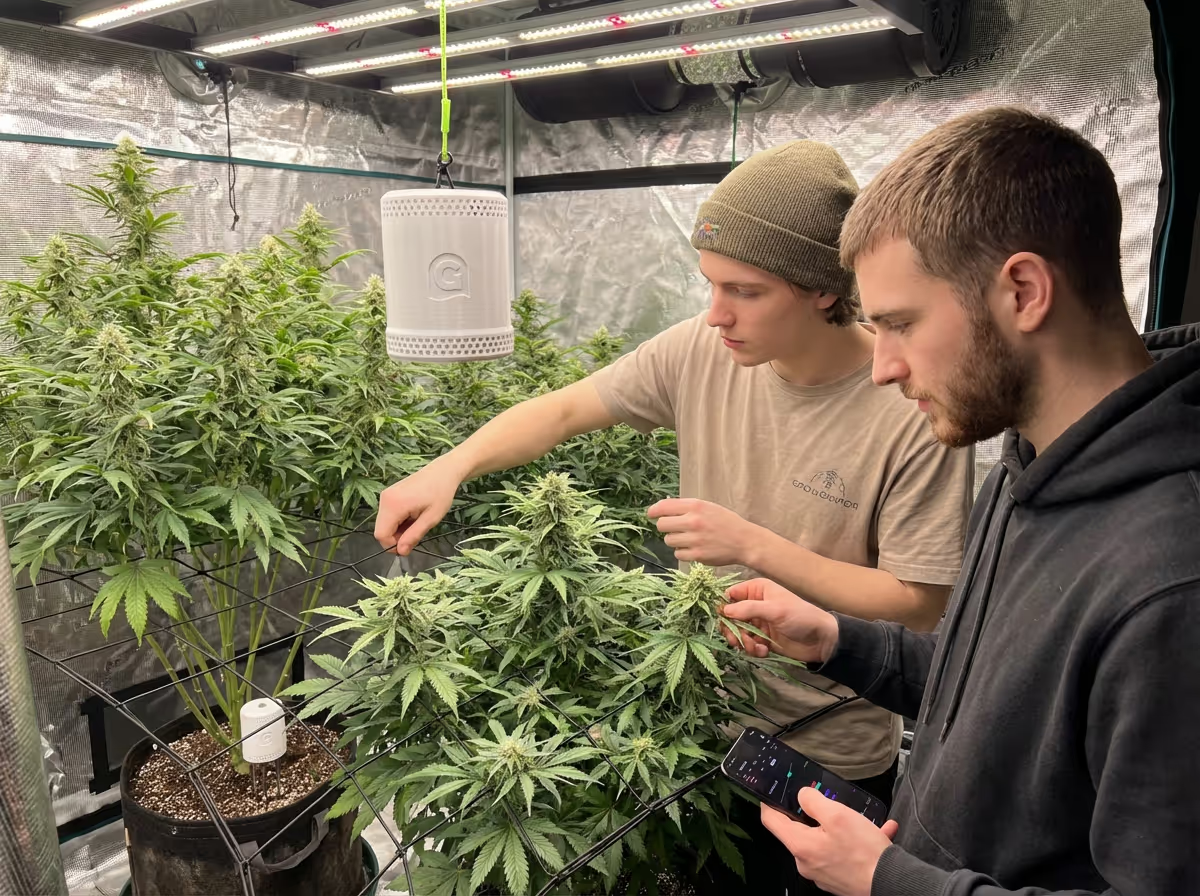
If you’re an experienced grower, you already know the feeling. You can dial in temperature and RH, you can hit a VPD range, you can “feel” when a room is a little off. But when you’re trying to consistently repeat elite results, instinct only gets you so far. At some point you want proof, not vibes.
That’s why it was genuinely interesting hearing the True Canna Cast Podcast dig into the Grow Sensor PRO. This wasn’t a surface-level chat or a quick mention. They got into the practical stuff that actually matters in real grows, and they didn’t hide the reality that a serious sensor isn’t a cheap impulse buy.
They also weren’t shy about how much they liked it.
“The Grow Sensor, oh my God, I love this damn device. I’m so chuffed to have it.”
That sets the tone.
And if you’ve been hovering on the fence, already running a decent setup, and you’re considering whether the Grow Sensor PRO is “worth it”, their conversation is the kind of real-world perspective you want to hear.
This post is a quick overview of what stood out, and then the simple next step is to listen to the episode itself on the True Canna Cast Podcast (I’ll be embedding the player in this post).
One of the most relatable parts of their chat was how quickly the sensor becomes something you actually use, not just something you install and forget.
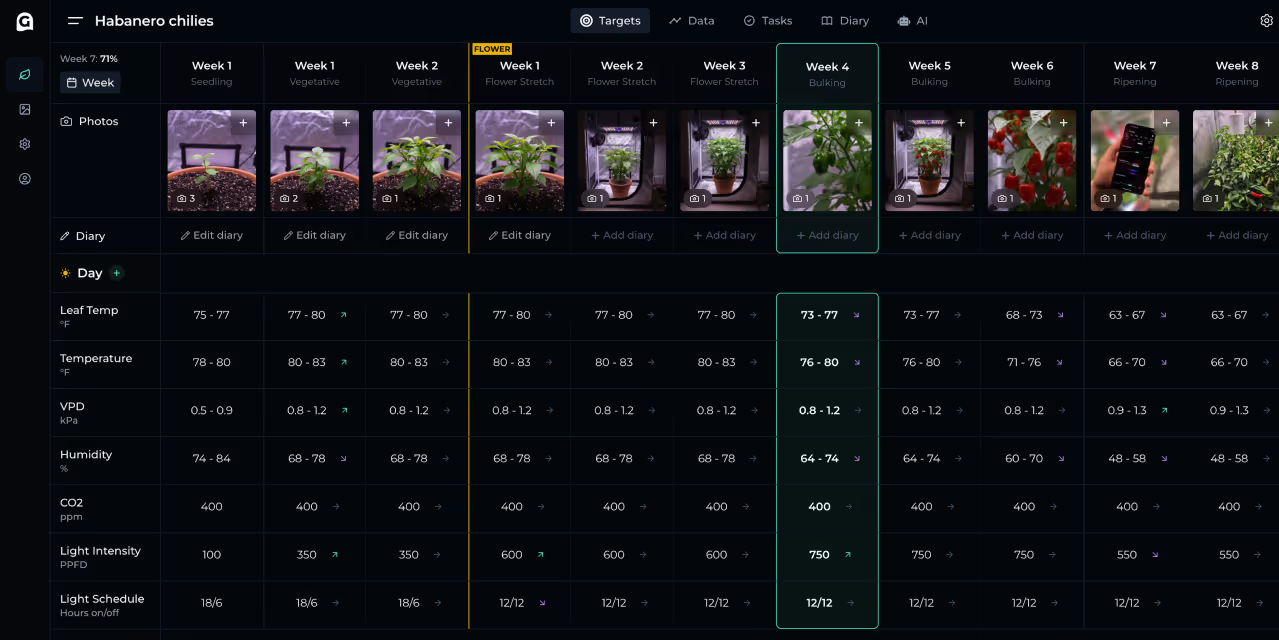
“I’m like constantly looking at my phone. It’s got all the information going to the app where it kind of tells me everything what’s going on in the grow at the time.”
That line matters because experienced growers don’t need more “data for the sake of data”.
What we want is the ability to spot patterns, confirm causes, and make small corrections with confidence.
The podcast keeps coming back to that theme, the Grow Sensor PRO doesn’t just throw numbers at you, it gives you a clearer picture of what’s happening, when it’s happening, and what changed.
They also described it as more than they expected:
“Absolutely amazing device. Does everything you can imagine. Does more than I even knew that I needed, but I love it now.”
That’s a common moment with properly featured sensors. You buy it for one reason (usually CO2, VPD, PPFD), and then you realise the real win is how all those readings connect.
A lot of growers start with basics, then they add little Bluetooth hygrometers, then maybe a controller ecosystem. The podcast does a nice job describing that path and why the Grow Sensor PRO feels like a step change, not a marginal upgrade:
“Now, to get the proper grow room sensor that not only has all of the temperature and humidity, the basic metrics, but goes way beyond that. It’s got everything else you can possibly imagine.”
And later:
“For me, to be able to look and see what’s happening, when things are happening across the board, with all levels of information is amazing.”
The conversation touches the stuff that tends to be missing from “good enough” systems, especially if you’re running mixed lighting, pushing intensity, or trying to keep consistent conditions across a room with known dead spots.
They also called out a metric that experienced growers are starting to respect more and more:
“It reads dew point… that’s probably one of the metrics that you don’t get on most things, which I would say is actually a really good metric.”
If you’ve ever had a humidity spike, lights off transition, or a weird condensation risk that showed up “out of nowhere”, you already know why dew point visibility matters.
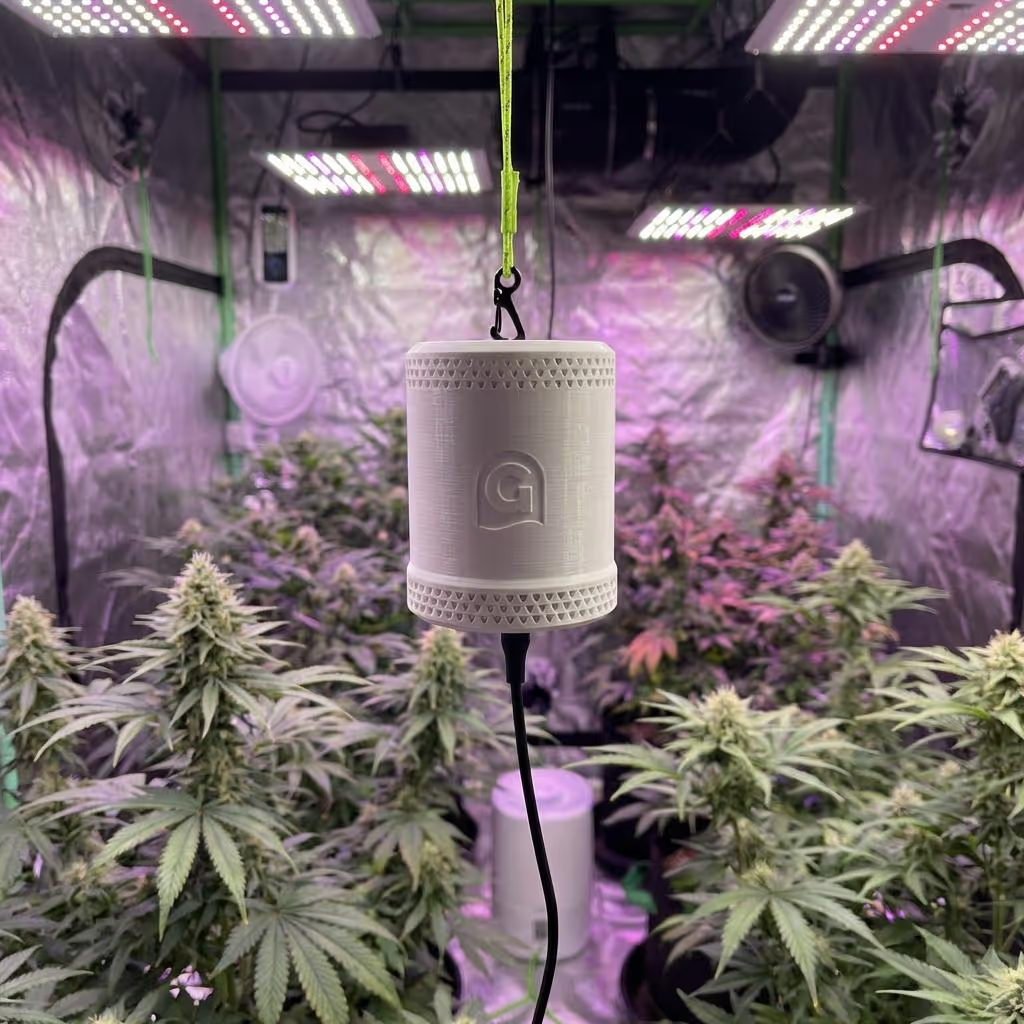
They didn’t dance around it. A serious sensor sits in the “do I really need this?” range. But their logic is the same logic most experienced growers end up at once they start pricing individual tools.
“It seems like a lot, but then once you start to break down individually, if I got a light reader, if I got a CO2 sensor, once you break it down, it quickly starts to make sense.”
That’s the point. If you’re already at the stage where you care about PPFD, spectrum behaviour, CO2 confidence, leaf temp, and long-term logging, then the “one device that does it properly” argument starts to look practical.
They made a specific comparison that will resonate with anyone who has shopped for decent light measurement:
“This is within accuracy of the standard Apogee 600s… and that will tell you what the PPFD is. [Grow Sensor] tells you that as well as spectrum.”
And they framed the bigger picture too:
“If you look at an industrial calibrated sensor that would monitor all of that, you would be looking at tens of thousands.”
That doesn’t mean every home grow needs industrial gear. It just puts the Grow Sensor PRO in context: it’s trying to bring “serious capability” into a price band that doesn’t immediately become commercial-only.
This was one of the strongest credibility moments in the chat because it wasn’t “I like it”. It was “someone technical checked what’s inside and was impressed”.
“He said to me, ‘Oh, that’s the Rolls Royce. That’s the best one we can get.’”
For experienced growers, that kind of validation matters. We’ve all seen products that look great in marketing and then cut corners in the parts that actually affect accuracy and long-term trust.
They also summed it up simply:
“Suffice to say, it’s got the top components and yeah, it just ticks all the boxes when it comes to a grow room sensor.”
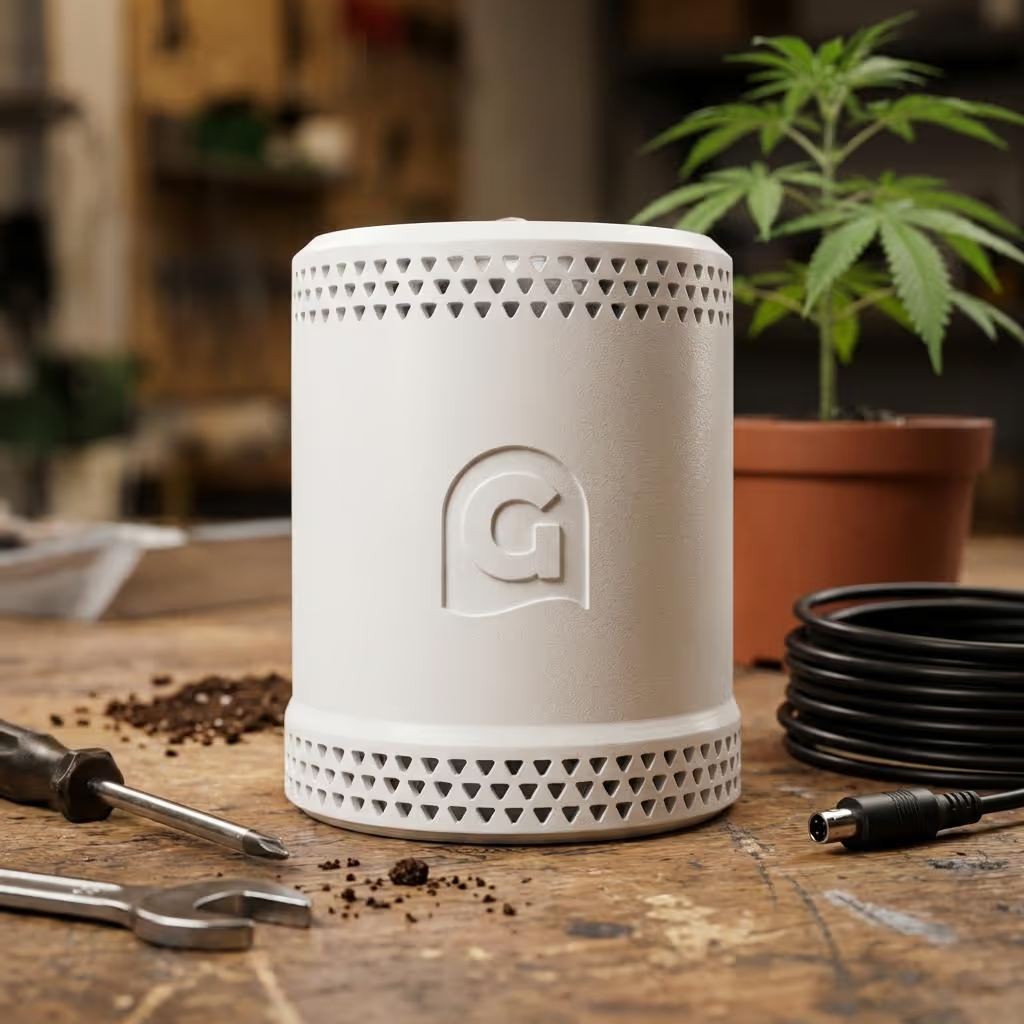
This part will hit home for anyone who’s tired of paying forever to access their own history.
“The last thing you need is another cost added to your life.”
And more directly:
“You’re not paying any more for subscription to get your data in 30 days.”
Even if you’re not personally allergic to subscriptions, the underlying point is important: long-term grows get better when you can compare runs.
If your data disappears, or sits behind a paywall, it makes the “learn and repeat” loop harder than it needs to be.
This is where the podcast gets properly interesting, because this is the stuff that can tighten up decision-making fast, especially under LEDs.
“This actually has a sensor to do that for you… it will read that temperature of your leaf for you, and it will give you the leaf VPD. Not an estimation, it will give you the actual leaf VPD.”
If you’re already thinking in terms of stomata, transpiration, and steering, you know why this matters. Leaf VPD is where “my room is in range” becomes “my plant is in range”.
They called it out plainly:
“Which is fantastic, and that gives you a really great metric.”
The conversation also gets into spectrum in a way that’s actually useful. Not overly academic, just practical: different fixtures behave differently, and sometimes the problem isn’t “your genetics”, it’s the light recipe.
“So it can read well into your far red spectrum… you can tell if you’ve got an oversaturation of far red and deep red.”
And then the real-world outcome:
“And this will allow you to see that… that explains why my crops over the last couple of runs have been a bit stretchy.”
That’s the value of measurement. It turns a recurring mystery into a fixable variable.
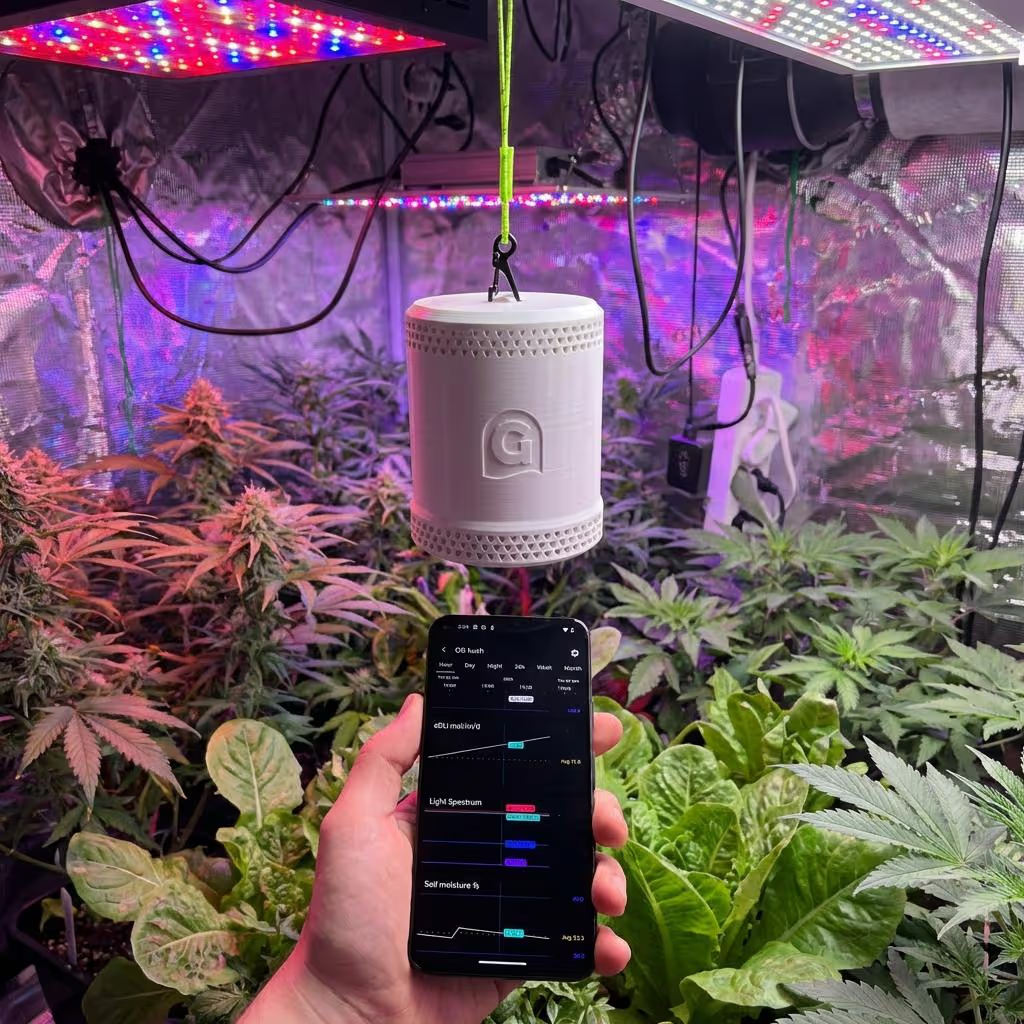
A sensor is only as useful as its ability to keep capturing reality, including the messy parts like power cuts.
“It’s on 80 percent battery still… I think maybe 10 days. So yeah, that’s pretty good.”
And:
“If you have a power cut, it’s still going to take that data for you reliably.”
That’s the kind of detail you only really appreciate when you’ve lost a night to an unexpected swing and you’re trying to understand what happened after the fact.
Not everyone wants to run an integrated smart setup, but if you’re already in that world, this line stands out:
“It does have the ability to connect up to Home Assistant… you could build yourself a fully functioning system that uses the [Grow Sensor] as the monitor and the sensor, and it will control all of your connected devices.”
If you’re the kind of grower who enjoys building a stack that’s modular and flexible, it’s worth hearing their perspective on this part.
This is a nice moment because it shows they’re not trying to pretend it’s perfect in every single way:
“It doesn’t show you, per se, at the moment, an actual spectral graph… some people are expecting to see that, and you will be disappointed that’s not there at the moment.”
That’s useful to know up front. You still get meaningful spectrum-related data, but if you specifically want a full spectral plot inside the app, their point is that it’s not currently presented that way.
If you’re considering the Grow Sensor PRO, the main reason to listen is that the podcast conversation is grounded in real grower problems: value vs separate tools, accuracy, drift, logging, dew point, leaf VPD, spectrum, and how this all fits into the way experienced growers actually work.
They summed it up in the simplest “should I care?” line:
“The information it can give and get you to learn is priceless.”
• The true cost of inaccurate grow data. Save $s with Grow Sensor PRO
• Grow Monitor Showdown: Pulse Pro vs Grow Sensor PRO
• Perfect Grow Sensor placement for max data accuracy.
• Beta testing success and pre-orders coming soon!
• The final countdown: Grow Sensor pre-orders opening soon
• What is a grow room sensor & why do I need one?
• The best grow room sensors (FREE comparison chart.)
• Measuring leaf surface temperature with the Grow Sensor
• What makes Grow Sensor the best choice for indoor cultivation? (Product Guide)
• How reliable is the Grow Sensor devices in harsh indoor environments? (Product Guide)


.avif)